
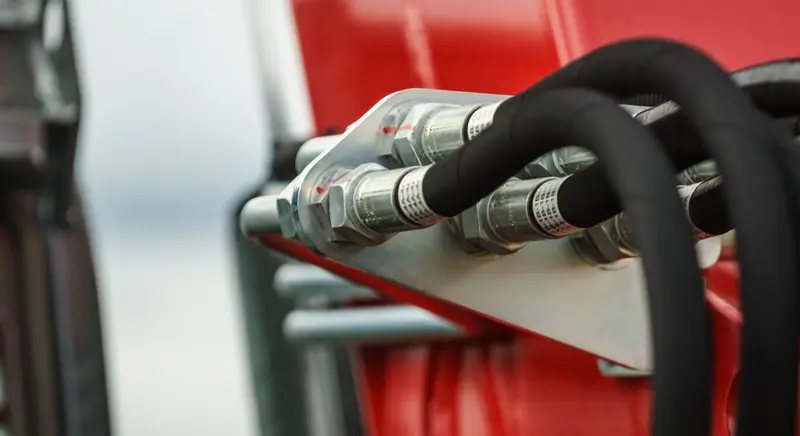
Northeast Ohio’s construction season kicks into high gear between March and May. After months of cold winter storage or reduced winter use, heavy machinery cannot simply be started up and thrown directly into high-load service. Hydraulic systems need careful inspection and preparation before they are pushed hard on spring job sites.
Temperature Sweeps and Rubber Degradation
Northeast Ohio winters regularly drop below 0°F. When machinery sits idle in unheated yards or barns during these months, the rubber compounds in your hydraulic hoses and cylinder seals contract and harden.
When spring arrives and you start the machine, the hydraulic fluid quickly heats up to operating temperatures between 140°F and 180°F. This transition from sub-zero storage to high-heat operation is called a temperature sweep.
These temperature sweeps put extreme thermal stress on the rubber:
- Hoses: The cold-hardened outer cover loses its flexibility. When the pressurized hose swells and flexes under load, the brittle rubber cracks, exposing the steel wire reinforcement to moisture, dirt, and road salt.
- Cylinder Seals: Rod seals and piston rings flatten and harden when cold. If you cycle a cylinder under heavy load without warming it up first, the brittle seal will tear or crack, causing internal bypass leaks (cylinder drift) or external oil leaks.
The Hidden Killer: Condensation and Water Intrusion
When a machine sits in winter storage, the oil level in the reservoir fluctuates with the temperature. As the air inside the tank cools, it contracts, drawing in damp outdoor air through the reservoir breather cap.
As the temperature changes between day and night, the moisture in that air condenses on the cold, bare steel walls inside the tank, dripping down into the oil.
Over a few months, this condensation builds up a significant amount of water at the bottom of the reservoir.
Water in your hydraulic system causes three major issues:
- Emulsification: Under the churning action of the pump, water mixes with the oil, turning it cloudy or milky. Emulsified oil loses its lubricating film strength, causing metal-on-metal wear.
- Acid Formation: Water reacts with hydraulic fluid additives to create acids that corrode the polished steel pump gears, valve spools, and cylinder rods.
- Rust and Sludge: Moisture rusts the interior of the steel tank, creating scale particles that flake off and block control valves.
The Role of Reservoir Breathers
Standard paper breather caps do not stop moisture. To protect your system during storage and operation, replace standard caps with desiccant reservoir breathers.
These contain silica gel beads that strip moisture from the incoming air before it enters the tank, and a synthetic filter element to catch fine dust. The silica gel changes color (from blue to pink) when it is saturated, telling you when to replace the cartridge.
Viscosity Selection: Choosing ISO 32, ISO 46, or ISO 68 Hydraulic Oil
Choosing the right oil viscosity is critical for spring startup in Ohio, where morning temperatures can be 30°F and afternoon temperatures can reach 70°F.
Viscosity is the measure of an oil’s resistance to flow:
- ISO 32: A thinner oil. It flows easily in cold temperatures, reducing drag and startup wear on frosty mornings. However, if the machine runs hot in the summer afternoon, ISO 32 can become too thin, losing its lubricating film.
- ISO 46: The most common multi-season grade for Northeast Ohio. It provides the best balance: thin enough to flow during spring morning starts, but heavy enough to protect your pumps and valves during hot summer operations.
- ISO 68: A thicker oil. It is designed for heavy-duty, high-heat operations (such as quarry loaders or asphalt pavers) running in summer heat. It should not be used in cold spring mornings as it will starve the pump inlet.
Refer to your manufacturer’s manual. For most Northeast Ohio construction and agricultural fleets, we recommend switching to a high-quality ISO 46 fluid for spring and summer operations.
Preventing Pump Cavitation during Startup
Cavitation is the formation and violent collapse of vapor bubbles inside the hydraulic fluid. It is one of the fastest ways to destroy a hydraulic pump.
When you start a cold machine, the hydraulic oil is thick and sluggish. If you immediately rev the engine to full throttle and cycle the controls, the thick oil cannot flow through the suction line fast enough to fill the pump chambers. This creates a vacuum inside the pump, causing vapor bubbles to form.
As the bubbles enter the high-pressure side of the pump, they collapse violently. These micro-implosions generate intense heat and shockwaves that blast tiny metal particles off the pump gears and pistons. You will hear cavitation as a loud, high-pitched whining or rattling sound.
How to prevent it:
- Warm-up cycle: Start the engine and let it idle for 10 to 15 minutes before cycling any hydraulic functions. This allows the pump to circulate fluid through the relief valve, warming the oil up to a safe operating temperature.
- Slow cycle: Slowly extend and retract all cylinders through their full range of motion under no load to circulate warm fluid through the entire system.
- Check the suction line: Ensure the suction hose from the reservoir to the pump is not kinked or collapsing.
How to Safely Flush the Hydraulic System
If your inspection reveals milky, dark, or contaminated fluid, you must flush the system. Simply draining the reservoir is not enough; more than half of the machine’s oil is trapped inside the cylinders, motor lines, and valve blocks.
To flush the system safely:
- Drain the reservoir: Drain the tank completely while the oil is warm to keep contaminants suspended in the fluid. Clean the bottom of the tank to remove any settled sludge or metal scale.
- Replace all filters: Replace both the return line filter and the pump inlet suction strainer.
- Refill the reservoir: Refill the tank with clean, new fluid of the correct viscosity grade.
- Purge the lines: Disconnect the return line where it enters the reservoir and route it to a waste container. Start the machine, run it at low idle, and cycle each cylinder to its limit. This forces the old, dirty fluid out of the cylinder chambers and replaces it with fresh oil from the reservoir.
- Top off: Stop the engine, reconnect the return line, and top off the reservoir to the correct level.
Get a Pre-Season Fleet Inspection
Catching worn hoses and contaminated fluid before your crews head to the job site saves thousands in lost time. SIG Hydraulics offers fleet preventive maintenance contracts that cover pre-season fleet assessments, fluid testing, and scheduled hose replacements.
Call us at (234) 575-4160 or stop by our Salem shop to discuss a scheduled inspection program. We serve Columbiana County, Canton, Akron, Youngstown, and Warren, keeping your heavy equipment Plumbed Right.